

The Northwest Territories’ vast land mass, much of it sparsely populated, makes it a unique place in our increasingly crowded world. But it’s also a reality that presents real challenges for those working to grow the territory’s economy through the mineral resource sector.
It’s hard, after all, to discover and develop mineral resources if you can’t get to them – or get your product to market.
But while the lack of infrastructure and access has long been cited as a significant barrier to investment, 2019 has seen an encouraging turning of the page with positive developments coming in the announcements of both the Tłı̨chǫ All-Season Road and the Slave Geological Province Corridor projects.
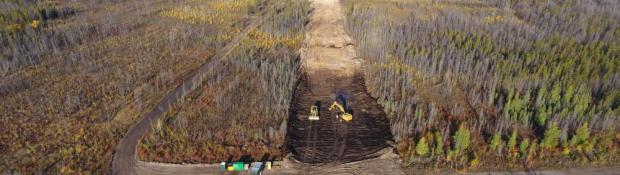
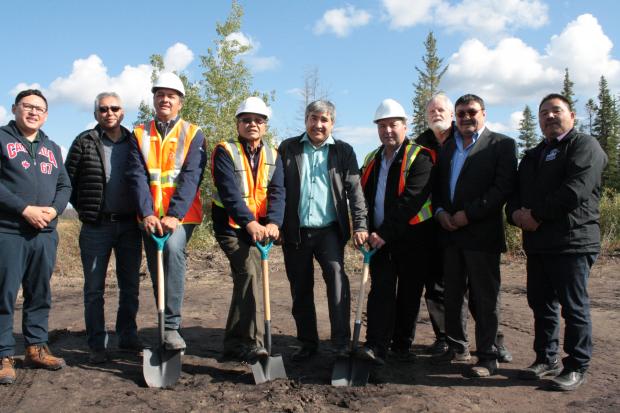
Formal construction of the Tłı̨chǫ All-Season Road began in September. This two-lane, gravel all-season highway will be 97 kilometres long and connect the community of Whatì to the NWT’s Highway 3.
Not only will this P3 (public-private partnership) project enable Whatì residents to drive in and out of their community year round, it will help reduce their cost of living and significantly increase the operating season of the winter road serving two other Tłı̨chǫ communities ― Gamètì and Wekweètì ― currently being impacted by climate change and warmer winters.
The project, which will cost approximately $200 million and is being jointly funded by the federal government (75 per cent) and the Government of the Northwest Territories (25 per cent), has implications for the mining sector too.
Once completed, (fall of 2022), the Tłı̨chǫ All-Season Road will also provide access to natural resources in the area, notably a cobalt, gold, bismuth and copper project 50 kilometres northeast of Whatì proposed by Ontario-based Fortune Minerals Ltd, and enhanced exploration access to the Bear and western Slave Geological Provinces known for their base metal, gold and diamond deposits.
The second key corridor project to get a significant boost this year was the Slave Geological Province Corridor. In August, the territorial and federal governments announced they were investing $40 million (Canada $30 million, GNWT $10 million) to support environmental regulatory reviews and planning studies designed to advance this long-anticipated project.
That funding came on the heels of $6.8 million committed by the federal government and GNWT in March to advance planning studies and geotechnical investigations.
In a related move, the Canadian Northern Economic Development Agency also confirmed $1.2 million for the NWT Geological Survey – part of a multiyear project to complete a high-resolution geological survey of the region. Data from that survey was released in September.
The Slave Geological Province is the home to the NWT’s three producing diamond mines. It is a region that has been compared with the legendary Abitibi Belt in Northern Ontario and Quebec, which holds some of the richest mineral deposits on earth.
Increased access will also support the GNWT’s vision of advancing the Taltson Hydroelectricity Expansion Project, which would provide clean energy to the mineral-rich Slave Geological Province and transition the North’s resource economy from relying on diesel-generated electricity to hydro power.
The Corridor project proposes a 413 kilometre-long, all-season infrastructure corridor northeast of Yellowknife to the NWT/Nunavut border where, ultimately, it would connect with a road being proposed by the Kitikmeot Inuit Association.
Nunavut’s Grays Bay Road and Port project is a proposed all-season road and deep-water port that would span 230 kilometres from the Northwest Passage to the NWT-Nunavut border.
The long-term vision is to connect Canada’s highway system to a deep-water port on the Arctic Ocean in Nunavut via Yellowknife and the Slave Geological Province.