

June 27, 2018
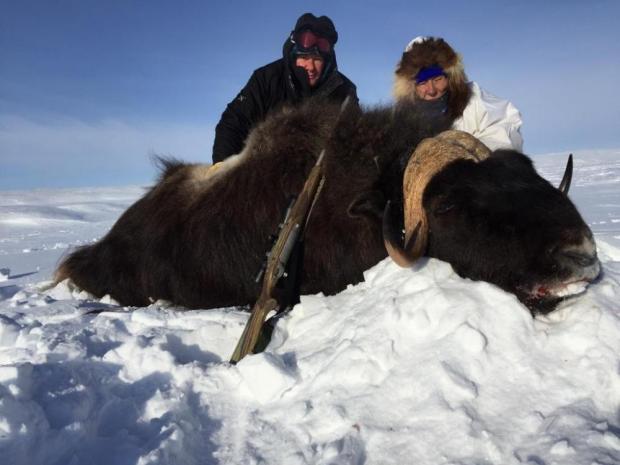
In Paulatuk, George Kregnektak and his daughter Georgina Wolki sit at their kitchen table with a group of excited, albeit exhausted, visitors. For the family-run Lessard Big Game Outfitters, which offers winter hunts for polar bears and muskox, it’s a familiar and comfortable setting.
Their visitors drink steaming cups of tea and reflect on their wildlife encounters, ice conditions and the survival skills they learned. After two weeks travelling by snowmobile and dogsled across frozen terrain and sleeping in a stove-heated McPherson tent, their eyes are wide and their hands gesture wildly as they recount the experience.
They haven’t experienced anything like this before.
“Dad is a traditional harvester,” says Georgina of George, who at 70, still navigates the land with ease and assurance. “Visitors are always really surprised and really impressed by his skills. As a harvester, he has travelled enormous distances to look for the animals and provide for his family.”
“He’s been doing it most of his life. He learned his skills from his parents and grandparents; and he has passed them on to our family. Which times of the year to hunt, how and where to travel, when to act and when to wait it out and re-track.”
Sharing Survival Skills Through Tourism
For George Kregnektak, sharing traditional survival skills and knowledge, taught and honed over generations, has also become a vital part of his tourism company. His guests receive a completely immersive, authentic experience that challenges them and leaves them with a greater appreciation for the rich cultures in the Northwest Territories.
“It’s really important for him to share those skills with others. People don’t usually understand what it takes to survive in the winter or hunt in the winter. It’s a learning experience,” Georgina says.
Staying warm during weeks of travel across the frozen and isolated Arctic Coastline is paramount and it is another area in which community, traditions and skill play an important role.
George’s wife still fashions his goose-down parka, pants and wolf-fur mitts by hand using traditional methods. His mukluks are crafted in Paulatuk by a local sewer.
His clothing catches the attention of most of his visitors, who Georgina refers to the local store to purchase their own mitts and mukluks. For some, they may serve as a reminder of their arctic adventure and the lessons of patience and skill that they learned from their guide.
In Celebration of National Indigenous People’s Day on June 21, we’re sharing a special blog series that profiles some of the NWT’s local tourism operators who share Indigenous culture as part of their tours. Learn more about National Indigenous Peoples Day here.