

ITI Minister Caroline Wawzonek announced this week that the GNWT is beginning work with a broad range of partners to create a Knowledge Economy Action Plan for the Northwest Territories.
GNWT begins the work to advance an NWT Knowledge Economy
So, what is a knowledge economy?
A knowledge (or innovation) economy is centred around ideas. While traditional industrial economies are built on manufacturing goods, (i.e. factories taking in raw materials at one end and putting out products at the other), the knowledge economy converts people’s skills, knowledge and ideas into economic value.
The “products” made in a knowledge economy are often technical and scientific like research, patents, trademarks and copyrights, proprietary technology, and software.
It is almost impossible to limit or capture the knowledge economy in a single definition. Instead, jurisdictions and organizations across Canada work on nurturing and creating a climate that will allow it (the knowledge economy) to evolve.
The foundation for a knowledge economy is an environment that enables residents, businesses, governments, academic institutions and social organizations to come together to prosper from the creation and sharing of knowledge and ideas. Three elements are key: education; an innovation system and an information structure.
Knowledge economies rely on strong partnerships among governments and industries, supporting hubs (or clusters) where people gather to work and innovate.
A successful knowledge economy will see proponents, not only share their ideas but fill each other’s gaps of experience, expertise, financing or technology while converting an idea into a product or other social good or value.
The mixing of minds in these clusters allows ideas to incubate with diverse stakeholders - each playing a different role in bringing an idea to market.
The development of a Knowledge Economy action plan for the NWT is one area in which the GNWT is working to increase economic diversification by supporting growth in non-extractive sectors and setting regional diversification targets
Key to the GNWT’s approach of diversifying and growing regional economies is the recognition that economic opportunities vary depending on where in the NWT you live. Since the introduction of the Economic Opportunities Strategy in 2014 the GNWT has focussed its investments in diversification by building on regional strengths.
In her address to the Arctic Development Expo, earlier this month, Minister Wawzonek noted that the Beaufort Delta is well placed to be an early leader in the NWT's knowledge economy.
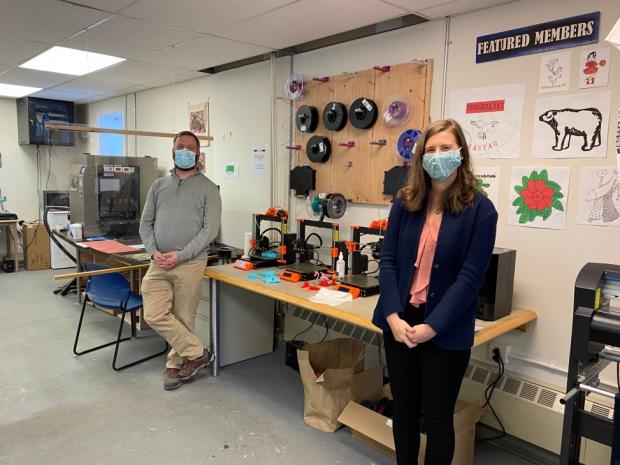
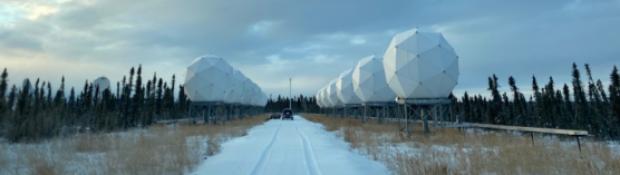
The current innovation cluster in Inuvik includes the Arts, Crafts & Technology Micro-manufacturing Centre (ACTMC), Aurora Research Institute (ARI), the Inuvik Satellite Facilities, the Mackenzie Valley Fibre Link, and the research being conducted on the Inuvik-Tuktoyaktuk highway corridor.
“Everyone I spoke to from Tuk to Aklavik to Inuvik had ideas they wanted to share. With the Broadband fibre to Tuk project underway, and redundancy coming via a fibre to Dawson City, Yukon, the pieces are in place for Inuvik to be the regional hub for knowledge and innovation,” she noted
Read the Minister’s speech in full here.
Click here to learn more about how you can participate in planned pubic engagements.