

March 22, 2018
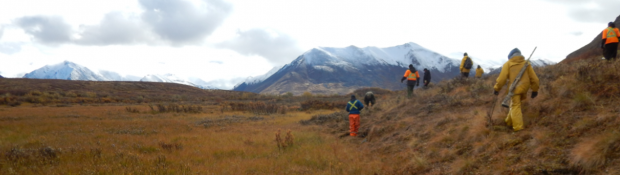
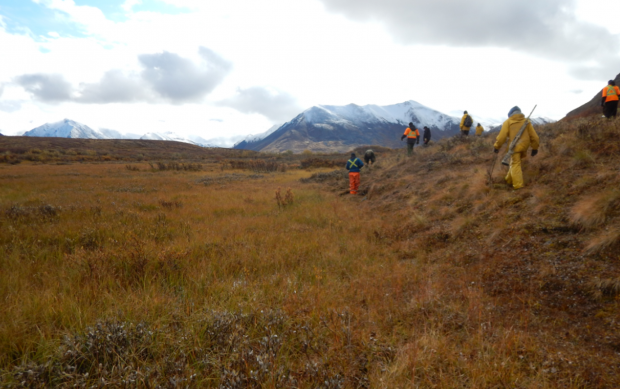
In the heart of the Mackenzie Mountains, a group of 12 gather around a small campfire, eating a dinner of stew and bannock. Their day has been a long one of hiking along the Canol Trail, stooping to cut and coil lengths of communication wire with each step.
There is no one else around for hundreds of kilometres.
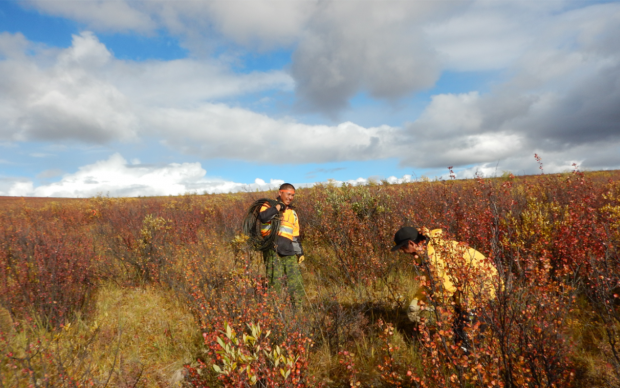
Margaret McDonald sits amongst them, preparing rose hips, spruce gum, and birch fungus that she collected during the day. She plans to use the natural ingredients to make salves, ointments and drops. The faces around her, all from the Sahtu Region, watch as she works.
When the Canol Trail Wire Program began in 2015, medics had to be hired from the Yukon to accompany the NWT-based work crew on the treks due to the special qualifications along the tough trail.
Organizers from Industry, Tourism and Investment’s Sahtu Office and Doi T’oh Territorial Park Corporation saw it as an opportunity to train and certify locals.
Skip forward to 2016 and there are four certified medics from Tulita and Norman Wells supporting the project; and keeping skill development, jobs and pay cheques in the region.
Margaret is one of the hires. She worked as a registered nurse previously and when she heard of the opportunity to be trained as an EMT on the Canol Trail, she was intrigued by the idea of incorporating traditional knowledge along the way.
In other parts of the world, the wire-clean up could well have been a straightforward, albeit labour-intensive initiative. But, in the Sahtu, people saw it as much more than that.
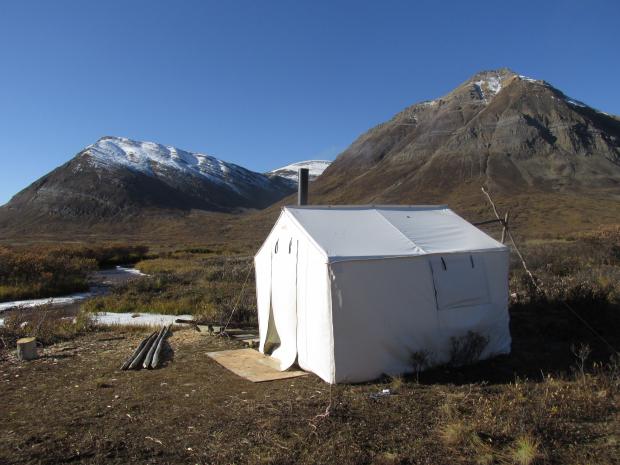
In addition to building job skills and capacity, the sharing of stories and traditional knowledge emerged as a natural and vital part of the project to establish the historic and world class tourism destination. Elders from Tulita and Norman Wells would come to the Canol Trail base camp at kilometre 222 and share stories around the fire, enriching the experience for the young, local crew.
Each night as Margaret prepared roots and herbs or worked on a piece of beading, she would talk to the group about their history.
As the sky grew darker, she would tell them about their ancestors; the Shuhtagot’ine people, who travelled the same routes by foot; about carriers and stretchers made of moosehide; and the reason she bent to kiss the chilled ground each time she set foot in the mountains.
The CANOL Pipeline was built during World War II to supply oil to the Allied Forces in Alaska. The now abandoned route of the CANOL pipeline is an important part of our history as a region, territory and a country - but it is also home to the original pipeline infrastructure from 1942, which has deteriorated over time.
The wire clean-up program was undertaken by the Government of Canda, the Government of the Northwest Territories, and Doi T’oh Territorial Park Corporation.