
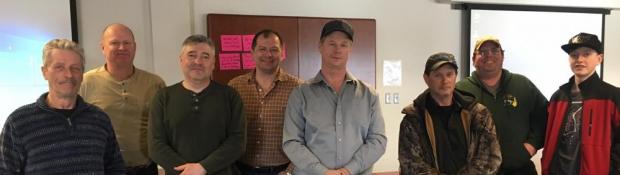

Optimism, fresh ideas and constructive conversation shined last week when fishers on the north side of Great Slave Lake met with staff from the Department of Industry, Tourism and Investment (ITI). It was also an opportunity to enhance relationships and collaboration with the NWT Fishermen’s Federation (NWTFF).
Fishers shared their ideas and plans for the coming year and brought a number of topics to the table for discussion. ITI staff provided an overview of funding programs available to NWT fishers under Support for Entrepreneurs and Economic Development (SEED) and the Northern Food Development Fund. ITI also works with the NWTFF to deliver funding to its members under the Commercial Fishers Industry Support Program.
The session also included an overview of the Strategy for Revitalizing the Great Slave Lake Commercial Fishery, which was introduced in February 2017. Strategy describes steps, actions and investments to be implemented over a five-year period, to restore commercial fishing in the NWT by advancing four overarching goals: increasing lake production, increasing processing in the NWT, growing the NWT market, and accessing export markets.
Empowering NWT fishers to develop a viable fishery is central to the Government of the Northwest Territories’ stated mandate to diversify the NWT economy, create local jobs, and contribute to reducing food costs. ITI’s North Slave Office plans to host another meeting with local fishers in November 2017.